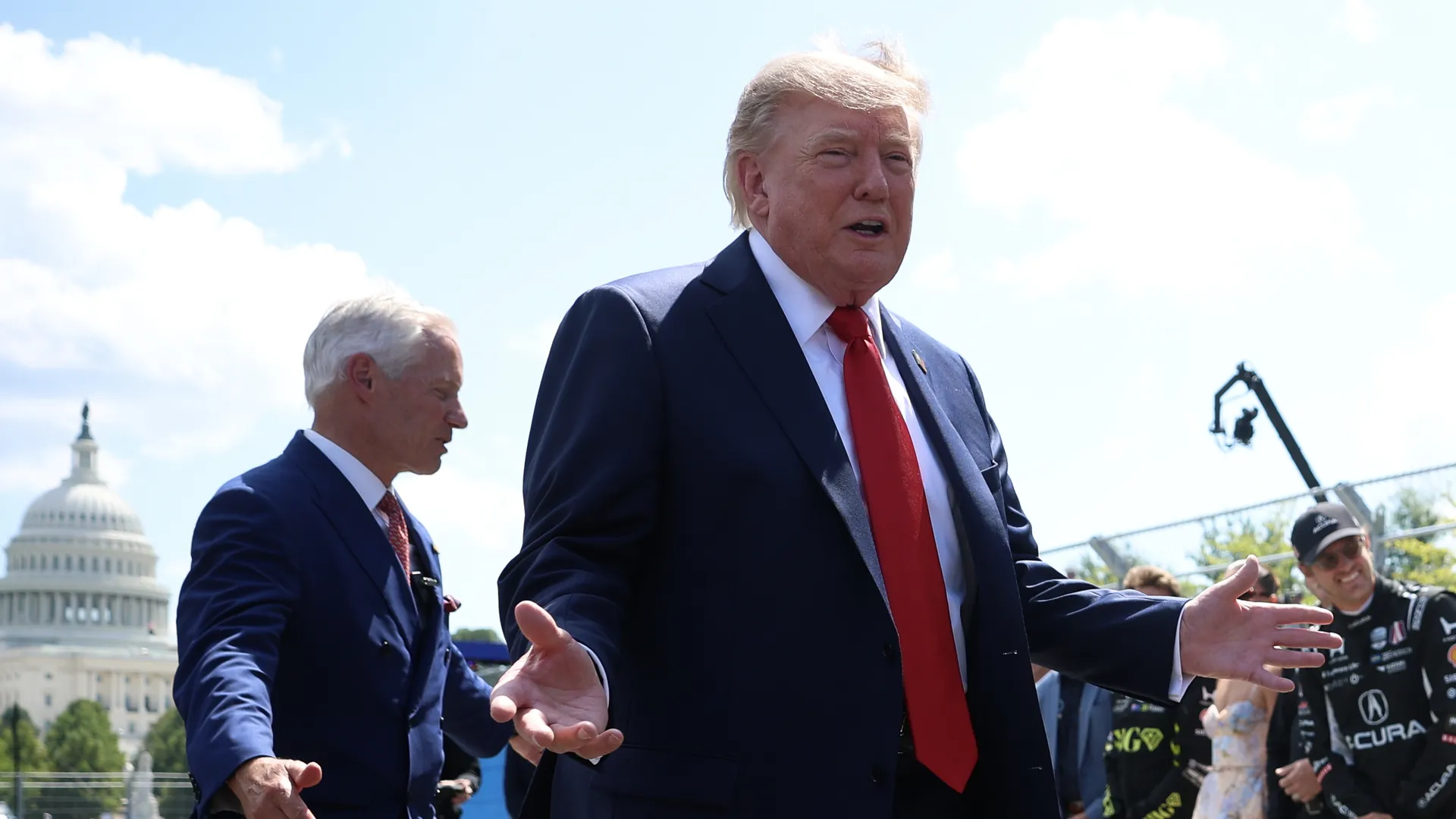
President Trump just endorsed a federal production incentive for film and television, calling on Republicans and Democrats to work together on legislation to bring entertainment jobs back to the U.S.
For an industry that has spent the last few years watching production migrate to Canada, the U.K., Europe, Australia, and other incentive-rich markets, this is a big moment.
The problem is pretty simple: America invented the modern film business, but it is no longer always the most competitive place to make film and television.
Studios and producers follow the math. If another country offers a 20%, 25%, or 30% incentive, that can be the difference between a project getting greenlit or dying in development. And after the streaming correction, production slowdowns, and tens of thousands of lost jobs, the U.S. crew base is feeling that shift in a very real way.
For months, Trump had floated the idea of tariffs on films made overseas. But tariffs were always a messy fit for an industry where a “foreign-made” movie might be financed in Los Angeles, shot in Budapest, posted in London, and released globally by an American studio.
A federal tax incentive is the cleaner version of the idea.
Instead of punishing productions for leaving, it gives them a financial reason to stay.
That’s why studios, unions, and lawmakers from both parties have been circling this issue. Senator Adam Schiff had already pushed draft legislation around a federal credit. The Motion Picture Association has been advocating for a national incentive. Jon Voight, serving as Trump’s Hollywood adviser, has also been pushing the White House on the idea.
The details still matter. A 15% labor credit is very different from a 20% or 25% broader production credit. And if a federal incentive stacks on top of state programs in California, Georgia, New York, New Jersey, and elsewhere, it could dramatically change the production map.
But the bigger signal is this: Washington may finally be treating film and television production like the economic engine it actually is.
This is not just about movie stars and red carpets.
It is about crew jobs. Construction. Catering. Hotels. Transportation. Local vendors. Post-production. Small businesses. Entire communities that benefit when a production comes to town.
The U.S. has incredible stages, crews, vendors, talent, and infrastructure. What it has lacked is a national incentive strategy that competes with the rest of the world.
If Congress actually gets this done, it could be one of the most important policy shifts for American production in decades.
The question now is whether this becomes real legislation, or just another Hollywood headline.