A stronger tax incentive, returning television series and expanding studio infrastructure are helping New York capture more production spending as the competition for film and TV work intensifies.
New York is getting closer to taking the top spot in U.S. film and television production spending.
The state generated approximately $1.61 billion in production spending during the third quarter of 2026, an 87% increase year over year, according to ProdPro. California remained ahead at approximately $1.76 billion, up 17%, but its lead has narrowed considerably.
For the crews and businesses that depend on production, the story is bigger than a ranking. New York is strengthening its ability to attract projects, retain returning shows and give producers financial reasons to bring their next production back.
A major part of that strategy is the state’s recently enhanced film tax incentive. Combined with experienced crews, diverse locations and additional soundstage capacity, the changes have made New York a more competitive place to produce.
New York Has Strengthened Its Financial Pitch
New York’s fiscal year 2026 budget expanded its production incentive with provisions aimed at attracting repeat business, supporting independent films and improving how qualifying productions claim their credits.
The main program offers a 30% tax credit on qualified production expenses, subject to eligibility requirements, and is funded at $700 million annually through 2036.
The new Production Plus benefit gives qualifying companies another reason to establish a continuing presence in the state. After meeting the program’s requirements, eligible companies can receive an additional 5% to 10% credit on qualified expenses for subsequent productions.
That can change the calculation for a studio deciding where to base multiple projects.
Instead of evaluating New York for a single film or television season, a company can consider the financial benefits of building a longer production pipeline there. For crews, vendors and facilities, that creates the possibility of more consistent work.
The quarterly figures do not isolate how much of New York’s growth came from the incentive changes. But the expanded program strengthens the state’s financial appeal at a time when producers are scrutinizing every dollar.
Credit Timing Is Part of the Equation
A competitive incentive is about more than its percentage. When a production can claim the money also matters.
For applications submitted on or after January 1, 2025, New York removed the requirement to claim larger credits over two or three years. Qualifying taxpayers can instead claim the credit in the taxable year that includes the last day of the production’s allocation year.
That does not mean an immediate payment. It does remove the previous multiyear claiming requirement, an important consideration for producers financing against an anticipated credit.
The timing of incentive proceeds can affect borrowing costs, cash flow and the amount of financing a production needs to carry. Those details help determine whether a location’s advertised savings translate into workable production economics.
Independent Films Get a Dedicated Program
New York also established a separate $100 million annual independent film production tax credit program, offering eligible productions a 30% credit on qualified costs.
Approximately $20 million annually is allocated to productions with $10 million or less in qualified costs, with approximately $80 million available to productions above that threshold.
Qualifying recipients can claim the credit in the project’s completion year. A production cannot receive both the independent film credit and the main production credit for the same project.
The dedicated program broadens New York’s approach beyond major studio productions. Independent films also employ crews, rent equipment, book locations and support post-production businesses, while creating opportunities for emerging filmmakers.
For a production market, a mix of project sizes can help build a broader base of activity.
Returning Television Helps Keep People Working
New York’s growth also rests on an established television business.
Long-running productions such as Law & Order and Law & Order: SVU, alongside series including FBI, Elsbeth and The Fall and Rise of Reggie Dinkins, give the state a foundation of recurring work.
A major feature can generate a substantial burst of spending. A returning series can bring crews and vendors back season after season.
That continuity matters throughout the production economy. Transportation companies, caterers, rental houses, costume businesses, construction teams and post-production facilities all benefit when a show returns.
Production Plus reinforces that strategy by rewarding qualifying companies that bring additional projects to New York.
Soundstages Support the Growth
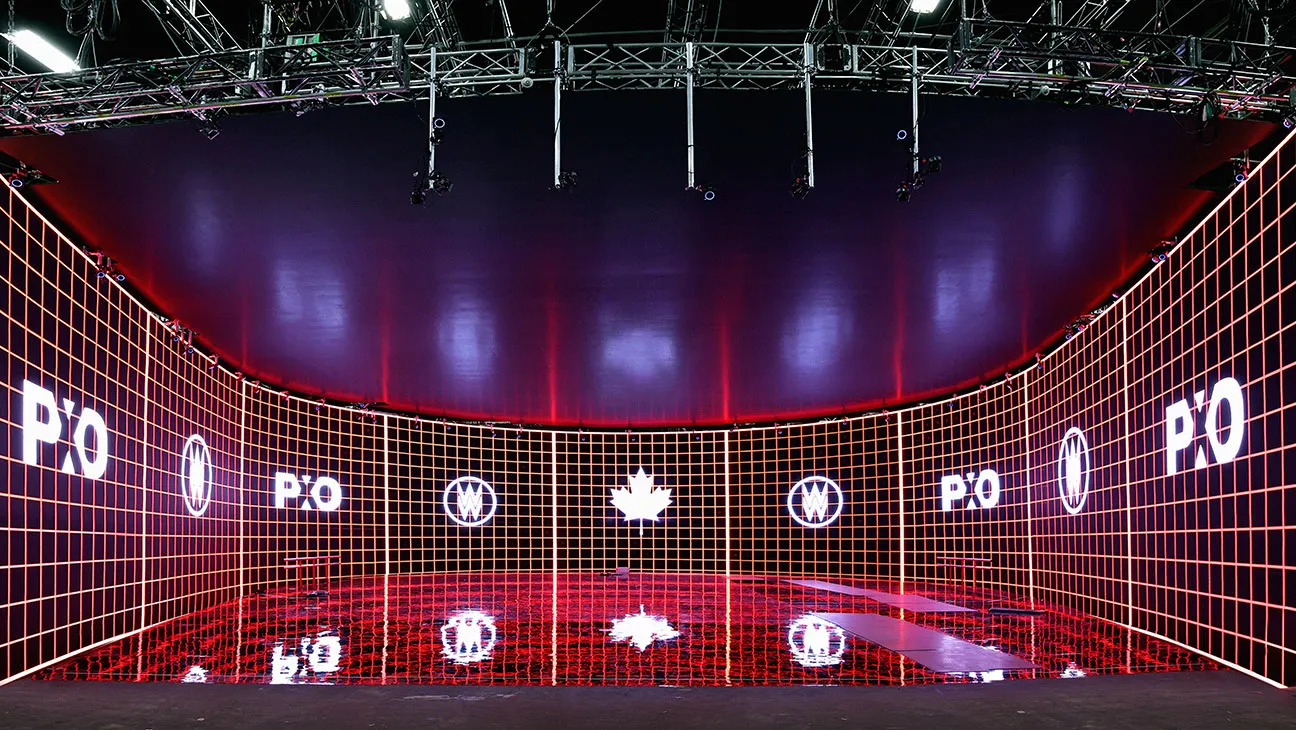
New York’s soundstage inventory has increased 43% since 2020, with new purpose built facilities popping up all over Manhattan and the surrounding burrows, including Wildflower Studios, East End Studios, Borden Studios and Pier94 Studios.
That expansion gives producers more options when they need stages, production offices and support space. Combined with the state’s crew base and access to locations across the surrounding region, it helps New York accommodate a wider range of productions.
The stages are an important part of the story, but they work alongside the incentive and the workforce.
A producer needs the financial package to make sense and the production infrastructure to be available when filming begins. New York has been strengthening both sides of that equation.
California Is Growing, Too
California’s 17% increase in quarterly spending represents meaningful growth. Approximately 80 live-action film and television projects shot in the state during the quarter, according to ProdPro.
It remains the spending leader, supported by generations of production experience and an extensive network of crews, facilities and service businesses.
But its competitors are becoming more attractive.
New York is combining its established production base with financial benefits designed to encourage repeat commitments. That gives producers a stronger alternative when they compare the costs and practical requirements of their next project.
California’s challenge is to translate its own recovery into sustained work while other states continue improving their offers.
The National Recovery Is Uneven
U.S. production spending reached approximately $4.9 billion in the third quarter, up 17% year over year, according to ProdPro.
The gains varied by market. Georgia’s spending increased 32%, while Illinois recorded a 15% rise in the number of live-action film and television projects shooting, even as spending declined.
Those differences show why production growth needs to be measured carefully. More projects do not necessarily mean higher spending, and higher spending does not automatically mean greater stage occupancy or more filming days.
For New York, the next test is whether its momentum continues across multiple quarters.
The state has strengthened its incentive, expanded its infrastructure and maintained a substantial base of television production. Together, those advantages are making it a more formidable competitor for the work that sustains crews and production businesses.
California still leads. New York is giving producers more reasons to close the gap.