The Malta Film Commission is moving to significantly expand the island’s production infrastructure with plans for an ambitious new “land-sea super stage,” designed to accommodate some of the most technically demanding film and television projects in the world.
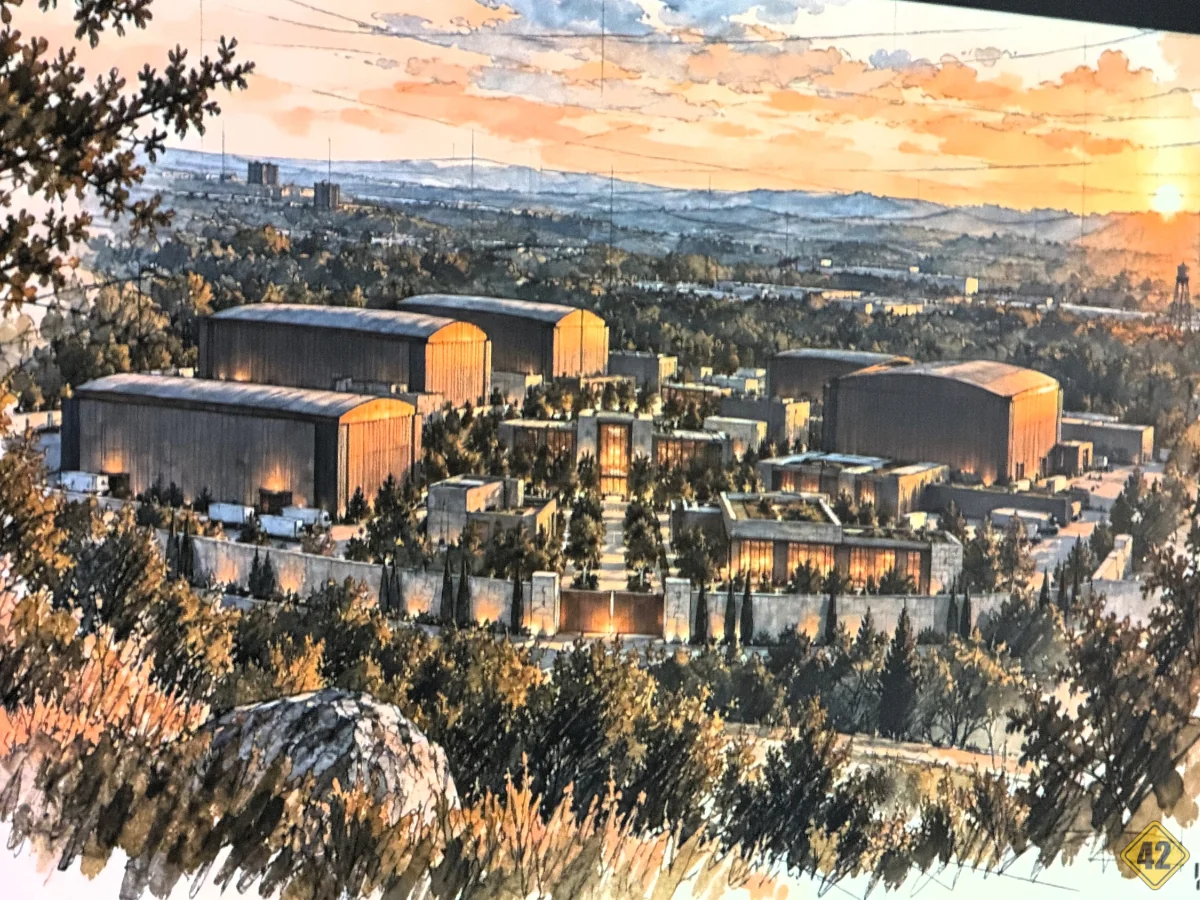
Set for construction at Malta Film Studios in Kalkara, the proposed facility will feature a climate-controlled indoor water tank spanning roughly 43,000 square feet, paired with an 85-foot-high roof capable of supporting large-scale aerial rigs — including suspended helicopters. The stage will sit adjacent to Malta’s existing deep-water tank, allowing productions to stage complex, multi-environment sequences in a single location.
“It’s a unique proposition for filmmakers, both because of the scale and because of where it’s located,” said Malta Film Commissioner Johann Grech. “You can have a submarine inside the tank within the stage, and then an aircraft carrier in the deep tank outside, all with an infinite horizon.”
The super stage is part of a broader expansion plan that would create a cluster of new sound stages on the island. Malta has hosted major international productions in recent years, including Gladiator II, Napoleon, Jurassic World Rebirth, and the upcoming adaptation of The Magic Faraway Tree.
According to Grech, all necessary permits for the expansion are already in place, with the tender process expected to launch in the coming weeks.
Malta’s reputation as a water-production hub dates back more than six decades. Its original water tank was the largest of its kind when it opened, followed by the addition of the deep-water tank in 1979. Grech said the new development is intended to ensure that large-scale franchise films can complete entire production workflows on the island without relocating.
Since Grech took over as film commissioner in 2018, Malta has hosted approximately 200 productions, generating about $790 million in local spend and supporting roughly 1,800 full-time industry jobs, according to the commission. The island offers a 40 percent cash rebate on qualifying local expenditures, a key driver of inbound production.
“For every dollar we spend on the rebate, the treasury gets four dollars back,” Grech said.
Currently, U.K. and U.S. projects account for roughly 70 to 75 percent of Malta’s production activity, though Grech said efforts are underway to attract more work from territories including Australia.
As part of its international positioning, the Malta Film Commission launched the Mediterrane Film Festival in 2022, aimed at showcasing the country as a European production hub. The festival’s fifth edition is set for June 2026.
Malta has also joined the Council of Europe’s Eurimages fund, opening new opportunities for international co-productions at the independent and mid-budget level.
Looking ahead, Grech said bookings for 2026 are tracking ahead of last year. Among the projects in development is an epic limited series from Mel Gibson centered on the 1565 Great Siege of Malta, though the production is unlikely to shoot this year as Gibson remains focused on The Resurrection of the Christ.
“Twenty years ago, a project like that would have been front-page news,” Grech said. “Today, it’s normal.”
“When I became commissioner, I said we would build a world-class film industry,” he added. “People said we were thinking too big. But this wasn’t overspending — it was investing.”