Canada’s ‘Hollywood North’ Expands With Massive New Studio Complex in Vancouver Suburb
Just outside downtown Vancouver, in the city of Burnaby, a sprawling new film and television production facility is quietly coming online—one that underscores how aggressively Canada continues to position itself as a top-tier alternative to Los Angeles.
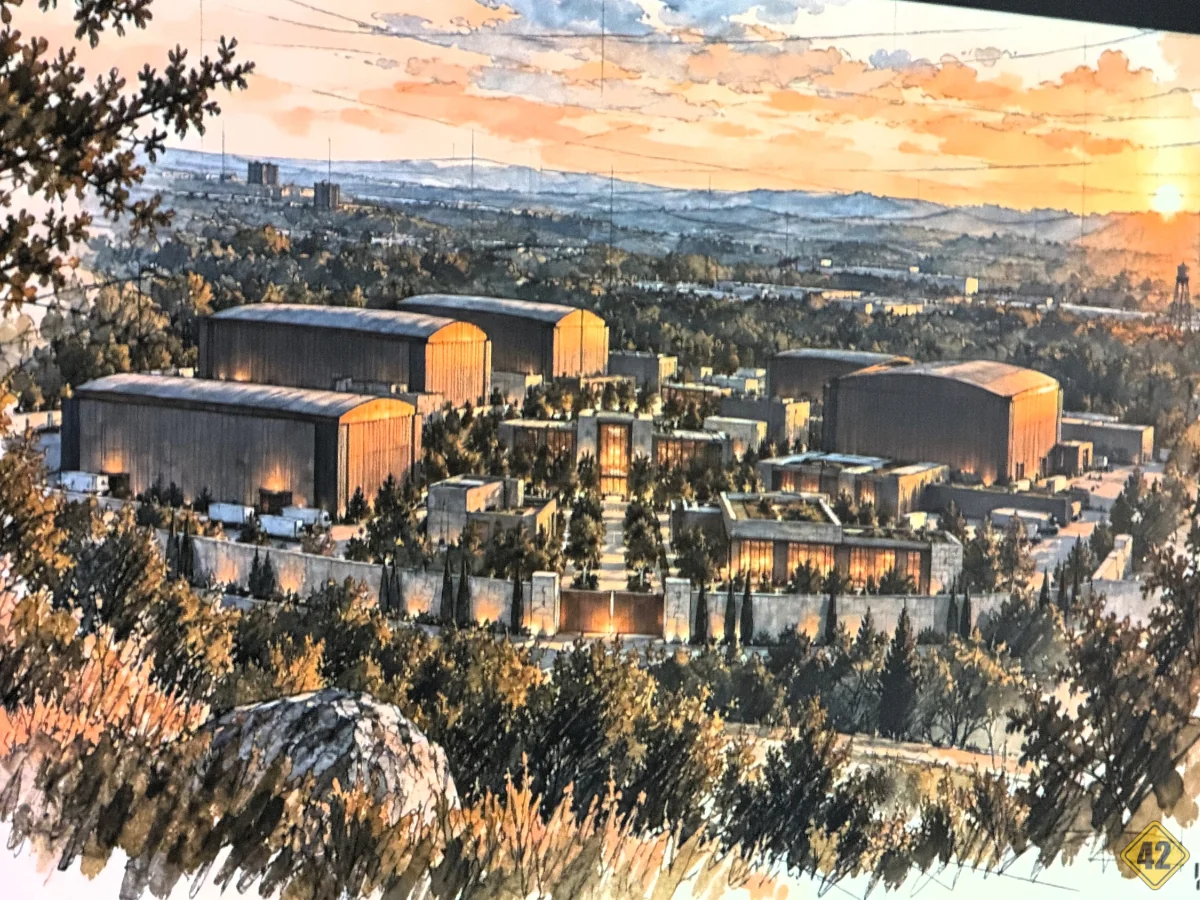
Lake City Studios, a 1.3 million-square-foot campus located roughly 20 minutes from Vancouver’s core, is one of the largest purpose-built studio complexes in North America. Backed by an estimated $350 million investment, the facility adds 21 sound stages to a region already synonymous with high-end television production.
The project is operated by Bridge Studios, one of the area’s most established production companies, and owned by Larco Investments, a real estate firm that has increasingly leaned into entertainment infrastructure as a long-term growth play.
The timing is notable.
After a sharp slowdown in 2023 driven by the Writers Guild of America and SAG-AFTRA strikes—which saw British Columbia’s production revenue fall by roughly 17 percent—the region is now regaining its footing. Demand for premium episodic television remains strong, and Vancouver has continued to attract major productions, including FX’s Shōgun and HBO’s The Last of Us.
“What British Columbia has really become known for in the last 10 years is being able to produce very high-end television series,” said Marnie Gee, the province’s film commissioner. “To have such a premier facility like Lake City alongside all of our other incredible studios, it just makes us an even better sell.”

Lake City Studios has 100,000 square feet of office space and more than 300,000 square feet for set design, hair, makeup, wardrobe and more. It’s also steps away from the SkyTrain’s Lake City Way station, making for an easy commute for roughly 5,000 employees.
Lake City’s scale is only part of the story. The design reflects how modern productions are evolving, particularly in the streaming era, where large ensemble casts, complex stunts and multi-unit shoots demand both space and flexibility. The stages range from just under 8,000 square feet to more than 42,000 square feet, with clear heights reaching up to 75 feet—allowing for elaborate rigging and aerial work that has become increasingly common in tentpole television.
But what sets the facility apart is what you don’t hear.
Sound isolation, a critical factor for productions working with increasingly sensitive equipment, was a central focus of the build. According to the project’s lead architect, Craig Mitchell, the walls separating stages are several feet thick and layered with sound-absorbing materials, while the exterior is reinforced with dense concrete designed to eliminate even low-frequency vibrations.
“You need to make sure that whatever sounds or events happening in one film studio are not permeating into the next,” Mitchell said.
That level of acoustic control is particularly valuable as productions look to minimize costly fixes in post-production—another sign of how infrastructure decisions are increasingly tied to efficiency as budgets come under scrutiny.
Unusually for a facility of this size, Lake City also benefits from its location. While many large studio campuses are tucked into remote industrial zones, the Burnaby site sits adjacent to a major transit line, offering access for thousands of crew members while still maintaining the isolation required for production.
Sustainability, too, has become a key selling point. The facility runs on renewable electricity and incorporates energy-efficient heating and cooling systems, along with a large green roof designed to manage stormwater and reduce heat absorption. Portions of the site have also been preserved to protect nearby ecosystems, aligning with British Columbia’s broader push toward greener production practices.
The launch of Lake City Studios comes amid a broader global expansion of soundstage capacity, with new facilities coming online across the U.S., U.K. and beyond. That surge has raised questions about whether supply may outpace demand in the near term, particularly as the industry continues to stabilize post-strike.
Still, British Columbia is making a calculated bet.
By doubling down on infrastructure, the province is reinforcing its position as a reliable, scalable production hub—one that offers U.S. studios a combination of experienced crews, competitive incentives and now, increasingly, world-class facilities.
For Burnaby, the impact is expected to extend beyond the stages themselves. City officials see the project as a catalyst for additional development in the area, from service businesses to hospitality, all tied to the steady flow of production activity.
And while the productions currently shooting at Lake City remain under wraps, one thing is already clear: in an industry where availability is everything, a fully booked stage still speaks louder than any press release.

Depending on configuration, the studio has 18 to 21 sound stages that are completely soundproof and range from 7,900 to 42,000 square feet. To ensure no noise, the architect built thick walls on either side, with sound-absorbing blankets layered in between.