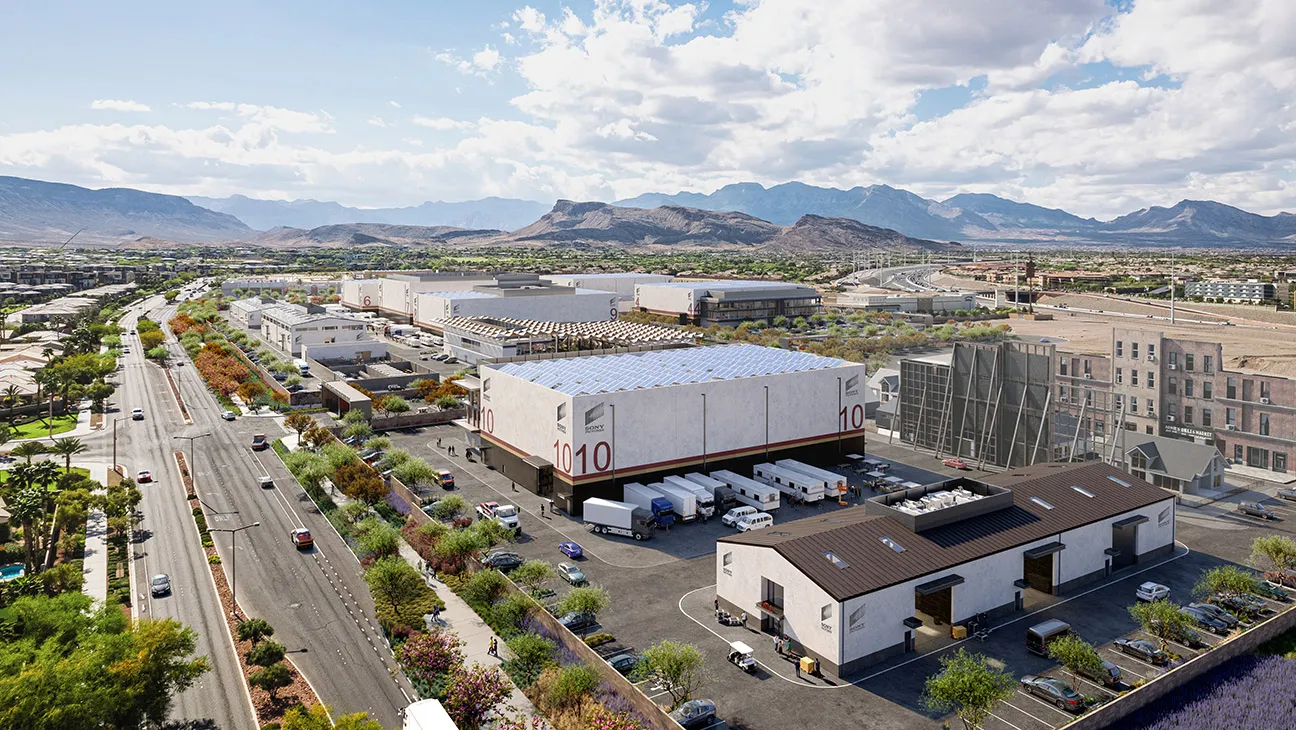
Nevada’s construction labor unions are mounting a $1 million public campaign to resurrect stalled legislation that would supercharge the state’s film incentive program and pave the way for Summerlin Studios, a proposed 83-acre production campus backed by Sony Pictures Entertainment, Warner Bros. Discovery and Howard Hughes Holdings in Las Vegas’ Summerlin community.
The new political action committee, Nevada Jobs Now, formed by a coalition of 21 Southern Nevada Building Trades unions, plans a full-court press ahead of an anticipated special legislative session that Gov. Joe Lombardo has signaled he will call to address “unfinished” business from the regular session that ended June 3.
“These are real lives and real jobs that are at stake here,” said Vince Saavedra, executive secretary-treasurer of the Southern Nevada Building Trades Unions. “It’s not just giving out tax credits to billionaires. These are real Nevada working families who need the work right now.”
The revived push follows the high-profile collapse of a bill this spring that sought to overhaul Nevada’s current $10 million annual film credit cap, proposing $95 million per year in incentives tied to construction of the Summerlin Studios campus and an adjoining entertainment district. The measure squeaked through the Assembly 22–20 but never received a Senate vote as the session expired amid procedural delays.
Skeptics seized on a state-commissioned report projecting a $0.52 return in state and local tax revenue for every $1 in credits, and questioned whether Nevada should extend sizable subsidies to Fortune 500 partners. Supporters counter that the project represents a long-term industrial strategy, projecting as many as 19,000 construction jobs and 17,000 permanent jobs once the campus and related development are fully realized.
“We knew that once the Raiders’ stadium was going to be built, there was going to be a whole bunch of remodeling going on in the hotels,” said Tommy White, business manager and secretary-treasurer of Laborers Local 872, drawing a line from the union’s support of public subsidies for Allegiant Stadium to the studio plan. “So doing an investment like this $500,000 investment, I actually think a $500,000 investment for us, the Laborers, is small for the amount of return that we’re going to receive.”
The unions say they already have a project labor agreement in place between Howard Hughes, Warner Bros., Sony and Saavedra’s coalition to cover the proposed district, which includes the studio footprint and retail. To kick off its public outreach, Nevada Jobs Now will host a town hall Oct. 15 at 4 p.m. at Las Vegas Ballpark to walk voters through the plan and its projected economic impact.
Gov. Lombardo has been noncommittal on whether he would sign a film credit expansion, though he recently told KTNV the concept could be on the table for a special session—if it’s clearly framed as a “jobs bill.” Any special session must specify its agenda; lawmakers may only take up items listed in the governor’s call (or by a two-thirds vote of the Legislature to convene).
Assembly Majority Leader Sandra Jauregui, the bill’s sponsor, said constituent interest hasn’t waned since adjournment. “Since the end of session, my colleagues and I have heard from hundreds of constituents who’ve expressed their continued excitement for the economic opportunities this project will create and that our community desperately needs,” the Las Vegas Democrat said. “I hope we have the opportunity to bring this bill back in the upcoming Special Session of the Nevada Legislature and ultimately deliver a brand-new industry and tens of thousands of jobs to our state.”
Nevada’s push to lure large-scale studio infrastructure dates to 2023, when a separate proposal championed by state Sen. Roberta Lange also stalled in committee. The latest effort arrives amid intensifying interstate competition for production spend and renewed pressure from organized labor to broaden Nevada’s economic base beyond gaming and hospitality.
Whether Summerlin Studios becomes the state’s next marquee development—or another marquee miss—now hinges on how swiftly the governor moves, how narrowly he draws the agenda, and whether lawmakers are ready to revisit a politically thorny mix of jobs, incentives and long-term industrial policy.