The planned six-stage development pairs new production infrastructure with Illinois’ expanded film incentives, giving the St. Louis region a bigger role in the competition for Hollywood business.
Illinois is putting more than a tax incentive behind its pitch to Hollywood. It is putting soundstages in the ground.
Hollywood River Studios broke ground October 5 in Wood River, Illinois, on a production campus whose full development is expected to reach approximately $90 million, including a hotel and conference center. Gov. JB Pritzker joined developer Christopher Breakwell, local officials and labor representatives at the former Envirotech Business Park for a project designed to bring major film, television and streaming productions to the Illinois side of the St. Louis region.
For the production community, the proposition is straightforward: purpose-built stages, support facilities and a competitive incentive in a region looking to establish a lasting place on the production map.
“Producers need two things before they commit to a region: the right incentives and the right stages,” Breakwell, Hollywood River Studios’ founder and CEO, told TV Tech. “Illinois has the first. Spantech’s modular soundstages let us deliver the second at the speed this industry moves.”
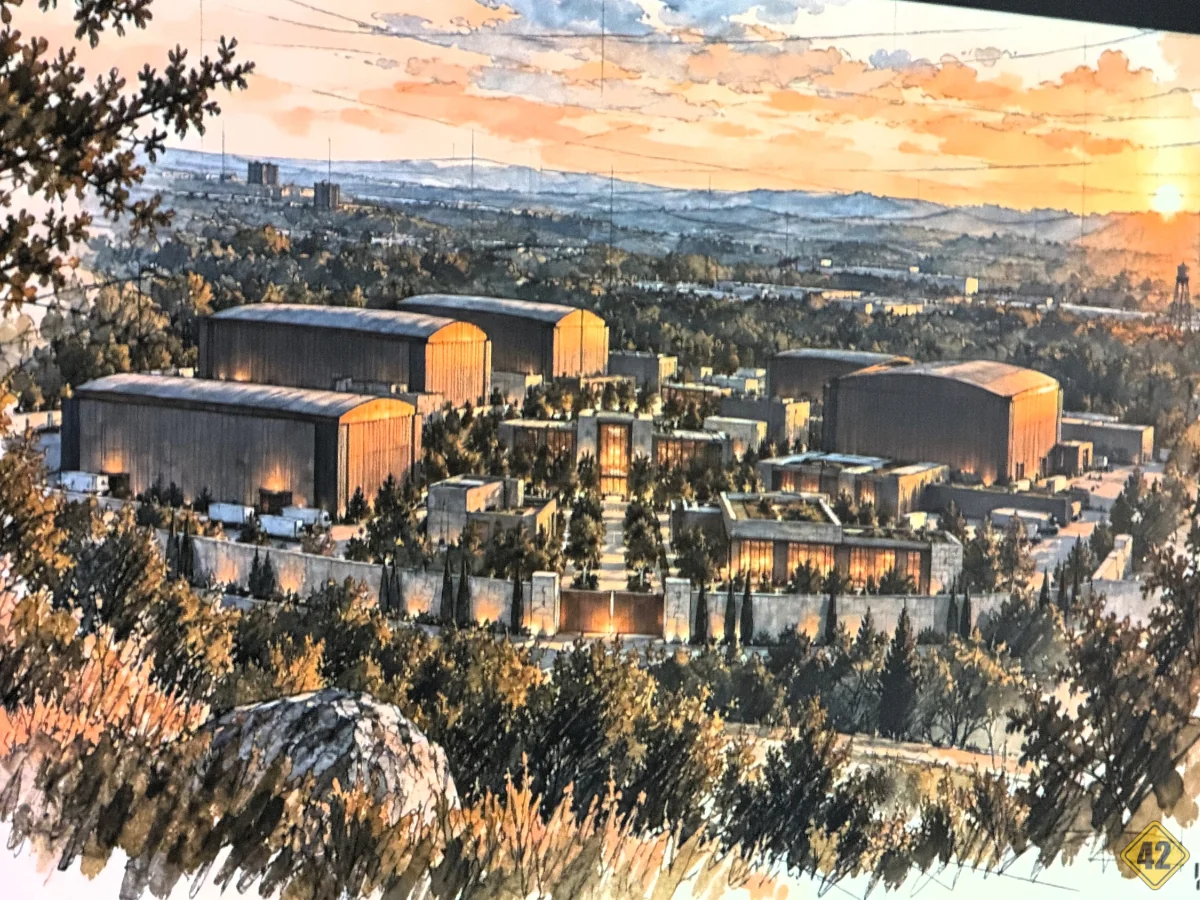
The company’s published master plan calls for six soundstages totaling approximately 144,000 square feet on a 110-acre campus, alongside production offices, warehousing, more than 1,000 parking spaces and a planned esports venue. Construction and expansion are intended to proceed in phases as demand develops.
The studio development has been reported at approximately $62 million, with the broader buildout reaching about $90 million. Breakwell told The Telegraph that the higher figure includes the hotel and conference center—facilities that could help the campus accommodate visiting productions and other events.
Belgium-based Spantech will supply modular soundstages using its Grand I-Novation system, a patented foldable steel truss structure designed to provide large, column-free production interiors. According to TV Tech, the stages will offer approximately 42 feet of overhead clearance, providing room for substantial sets, lighting and rigging.
The construction approach is intended to accelerate delivery, with Spantech anticipating stages being ready in about 12 months. At the groundbreaking, Breakwell told The Telegraph he hoped to have the first stage vertical by late winter or early spring 2027 and completed by fall.
Hollywood River already has a regional support base. In June, the company unveiled a 55,000-square-foot warehouse facility at America’s Central Port in nearby Granite City. The former U.S. Army railcar repair facility houses offices and will store equipment for location shoots, giving the operation a foothold while the Wood River campus takes shape.
Together, the two properties position the company to service productions working across the greater St. Louis region, including locations on both sides of the Mississippi River.
The strongest financial draw, however, is Illinois’ expanded film incentive.
The state offers a 35 percent credit on qualified Illinois vendor spending and resident labor, with resident salaries eligible up to $500,000 per worker. Qualifying nonresident wages receive a separate 30 percent credit, subject to personnel and salary limits. Productions filming outside six Chicago-area counties can receive an additional 5 percent credit on Illinois resident salaries, while certified green productions can qualify for a separate 5 percent sustainability uplift.
For producers budgeting a Wood River shoot, that regional bonus is meaningful: it improves the economics of employing Illinois residents outside the state’s established Chicago production hub. Its application to resident wages is also an important distinction when calculating a project’s actual incentive return.
Illinois enters the development with measurable production momentum. The state recorded a record $703 million in film and television production expenditures in 2025, up 25 percent from 2019, supporting an estimated 18,000 industry hires.
“Last year, Illinois had more than $700 million in film and television production spending: real dollars going to Illinois businesses and workers, supporting our economy,” Pritzker said during the ceremony, according to The Telegraph.
Hollywood River’s employment ambitions are substantial. The company projects more than 1,000 potential permanent jobs at full development, with individual productions generating 300 to 500 temporary jobs. Those estimates depend on the campus being built out and attracting a sustained pipeline of work.
The potential business extends well beyond the stages. Set construction, equipment rentals, transportation, catering, accommodations and other production services could bring recurring spending to communities across the Metro East.
For U.S. production, the project presents a familiar but consequential test: can competitive incentives and new infrastructure turn an emerging market into a dependable filmmaking destination?
Soundstages give producers a reason to consider a region. Experienced crews, reliable vendors and repeat bookings give them reasons to return.
Hollywood River Studios has begun building the infrastructure. Its next major milestone will be getting cameras rolling.